

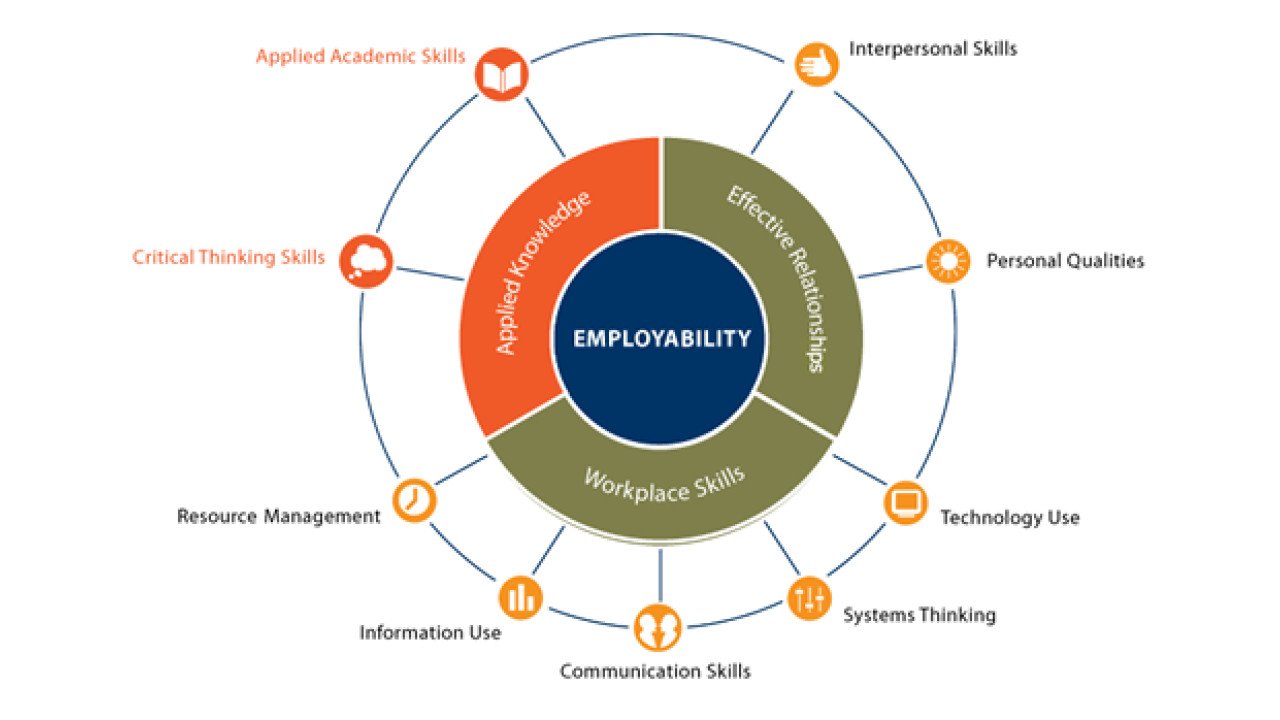
From Education to Employability
Are students leaving education with the knowledge, skills and confidence needed to participate productively in the economy?India’s education system is producing educated graduates, but it is not consistently producing job-ready graduates.
The main problem is a gap between what students learn and what employers need.
Why is there a gap?
Too much emphasis on examinations:
Students are often trained to memorise information and score marks rather than solve problems, communicate ideas, work in teams, or apply knowledge practically.
Limited practical exposure:
Many courses provide insufficient internships, apprenticeships, laboratory work, industry projects, and real-world experience. A student may graduate with a degree but have little experience of an actual workplace.
Skills are changing rapidly:
Employers increasingly value digital literacy, data analysis, AI-related skills, communication, critical thinking and adaptability. Curriculum revision often moves more slowly than the labour market.
Employability differs greatly by institution
Students from well-resourced institutions may have access to better laboratories, industry connections and placement opportunities, while students from many colleges struggle to obtain similar exposure.
Degrees do not guarantee employment
A degree remains important, but employers frequently look for a combination of qualification + skills + experience. This is particularly significant in a competitive country like India, where large numbers of graduates compete for limited quality jobs.
But the picture is not entirely negative
India has been trying to move toward skill-based and multidisciplinary education through reforms such as the National Education Policy 2020. There is also greater emphasis on vocational education, internships, entrepreneurship and experiential learning.