

When the State Uses Force, Who Will Answer?
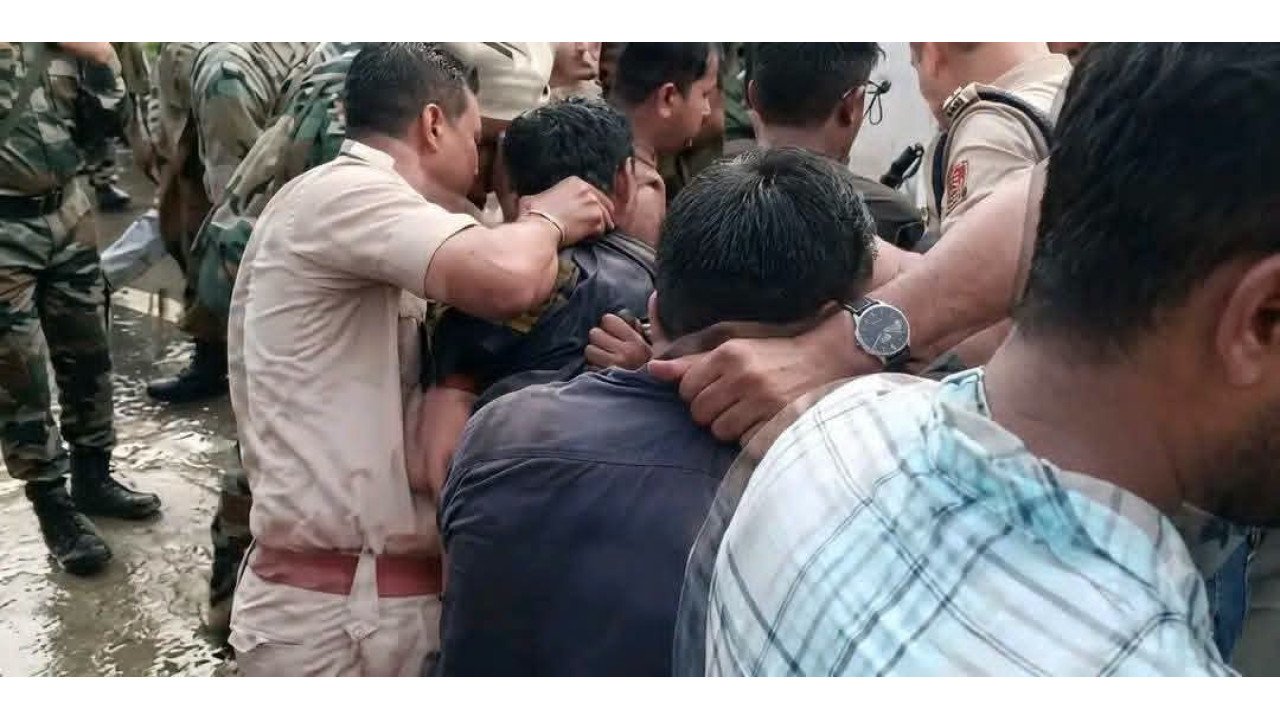
The recent police action against TET-qualified job aspirants in Agartala has drawn criticism on social media platforms such as Facebook and X. The use of water cannons and detention of protesters has raised an important question: how should the administration balance public order with the fundamental right to protest?
Senior journalist and psephologist Manas Pal, in a recent Facebook post, has also strongly raised this issue. He compared the police response to the TET aspirants’ protest with the administration’s handling of the recent protest by former militants/returnees.
The two protests were certainly different. The former militants’ protest reportedly included a prolonged road-and-rail blockade that affected public movement, with reports that vehicles and even an ambulance were stopped. The administration initially responded through appeals and discussions.
The TET-qualified aspirants, on the other hand, were protesting near Shiksha Bhavan over recruitment. Police used water cannons and reportedly detained around 100 protesters after the gathering was considered to be obstructing traffic and creating a possible law-and-order problem.
The government has said that the two incidents should not be compared directly because their circumstances were different. That may be so. But it raises another simple question: were the differences in police action justified by the differences in the two protests?
The Constitution gives citizens important rights. Article 14 guarantees equality before law. Article 19(1)(a) protects freedom of speech, while Article 19(1)(b) protects peaceful assembly. Article 19(1)(c) protects association, and Article 19(1)(d) protects movement. These rights are subject to reasonable restrictions, including those related to public order under Articles 19(2)–19(5). Articles 21 and 22 also provide important safeguards concerning life, personal liberty, arrest and detention. Citizens can approach the courts under Articles 32 and 226 when fundamental rights are alleged to have been violated.
The BNSS, 2023, also provides rules concerning the dispersal of assemblies, while the BNS, 2023, contains provisions concerning unlawful assemblies and certain acts by public servants.
The question, therefore, is not whether police have the power to control protests. They do. The real question is whether that power was used lawfully, reasonably and consistently.
If the action against the TET aspirants is found to have crossed legal limits, will there be an impartial inquiry and accountability?
And if the administration believes its action was justified, citizens deserve a clear explanation.
The law must be equal, and the use of state power must be accountable. Citizens have the right to ask: who will answer?